Wednesday, March 14, 2012

Two upcoming Sabeel conferences in California

Please share information about two upcoming "Sabeel" conferences with your contacts in California.
____


Palestinian Christians will speak at upcoming Friends of Sabeel Conferences in Sacramento and Sunnyvale, Calif.

Sacramento, A Time for Justice: Supporting Human Rights in Palestine & Israel, March 16-17, Click this link for details.

Sunnyvale, Breaking the Barriers to a Just Peace in Israel/Palestine, March 23-24, Click this link for details

The Rev Naim Ateek, founder of Sabeel, the ecumenical Palestinian Christian liberation theology center in Jerusalem, will shed light on current realities for Palestinians in the Holy Land at two Friends of Sabeel Conferences next month (see above links). 

Huwaida Arraf, a Palestinian Christian, lawyer and human rights activist will present along with a host of other international and regional scholars, theologians and activists.  Arraf just returned from Bahrain where she was invited to witness pro-democracy demonstrations. This past November, she was one of the Palestine Free Riders, who, inspired by the U.S. Civil Rights Freedom Riders of the 1960s, attempted to ride segregated Israeli settler public buses.

Naim Ateek’s personal story includes displacement from his family home as a boy during the creation of the state of Israel.  An “internal refugee,” he is a Palestinian citizen of Israel, an experience about which most Americans know little, if anything. Pastor Ateek is the author of numerous books and articles, including Justice and Only Justice: A Palestinian Theology of Liberation and A Palestinian Christian Cry for Reconciliation.  

Each two-day conference provides a unique opportunity for American Christians and others to hear perspectives and insights of the realities of Palestinians in the Holy Land.  Conference attendees will also learn about inspiring work being done in the region as well as the seemingly endless struggle.

--- --- ---

To receive regular bulletins from Ann Hafften, sign up at my blog - A Texas Lutheran's Voice for Peace: http://www.voicesforpeace.blogspot.com/

Tuesday, February 21, 2012

It Doesn't Make Sense: Illegal in Their Own Village

From the Ecumenical Accompaniment Programme in Palestine and Israeli: JE Berg, an accompanier in Bethlehem, filed this report which can be found at the EAPPI International website.

"It doesn't make sense to us either"
28.10.11
By: J E Berg, EAPPI Bethlehem

Mohammed Daoud is 22 and ready to start his adult life. He lives with his brother and 5 sisters in the family home, and like most young men, he wants to move out and spread his wings.

Mohammed is from An Nu'man, a village of 200 on the southern edge of Jerusalem. It is a close community, but it exists in a limbo that affects every aspect of life. After Israel occupied the West Bank in 1967, it unilaterally annexed the village to the Jerusalem municipality, along with a large area of the central West Bank. But even though An Nu'man came within the municipal boundaries, Israel refused to give its inhabitants Jerusalem residency cards. Instead it defined them as West Bankers, thus denying their right to live in their own houses. This logic extends to the realm of language: Israeli law refers to the residents as "present absentees."

Like many Palestinians both in East Jerusalem and the West Bank, Mohammed has almost no chance of obtaining a permit from the Israeli authorities to build a house in his own village. Since 1967, the occupying authorities have not given a single building permit to any resident of An Nu'man.

Without a house, Mohammad will not be able to bring a wife to his own home. The Palestinian Arab tradition is that young men start to build a house after finishing school. As soon as they start to earn money, they start to build, and can think about marriage. Mohammad wants to follow this tradition and settle here, in the village of his forefathers.

"I don't want to leave my place to be replaced by an Israeli," he says, but "I do not dare to build a house without permission."

His brother, who did build a house without an impossible-to-obtain permit, saw his home flattened by the Israeli authorities.

"When I see the demolished house of my brother, I know I will not attempt to follow my dreams."

Locals claim that An Nu'man has the highest number of educated people in any village of the West Bank. Mohammad has a degree in Geography from a Palestinian university in Jerusalem. While he was studying he met girls, but says he wants to marry someone from his village.

"I think it will only make problems for you if you marry a woman from other places," he says. "Perhaps the ideas of their family are different from the customs of your own family."

But his choice of wife is more than a matter of tradition. If a local boy wants to marry a girl from another village in the West Bank, he has to move out from An Numan. Only registered villagers can enter through the checkpoint here. Any girlfriend or new wife will not get permission to come here. And although he wants to marry, like most Palestinians Mohammed is attached to his village.

"My dream is to continue my studies, get a job and settle in my own house and start a family," he says.

"I love my village. It is good place to grow up. The 200 villagers all know each other. But the situation in my village is terrible now. We are included in Jerusalem, but we do not hold a Jerusalem ID. This makes us illegal in our own village. I know it is hard for others to understand. It doesn't make sense to us either."nier in Bethlehem, filed this report which can be found at the EAPPI international website.


--  -- 

For more about EAPPI, including how to participate, see the US website: www.eappi-us.org .

--- --- ---

To receive regular bulletins from Ann Hafften, sign up at my blog - A Texas Lutheran's Voice for Peace: http://www.voicesforpeace.blogspot.com/

Wednesday, February 15, 2012

Human Rights Watch Lambasts Israeli Policies Denying Residency Based on Palestinian Identity

This bulletin comes to us from the Evangelical Lutheran Church in America's Peace Not Walls campaign.

Human Rights Watch Lambasts Israeli Policies Denying Residency Based on Palestinian Identity

Israeli policies on Palestinian residency have arbitrarily denied thousands of Palestinians the ability to live in, and travel to and from, the West Bank and Gaza, Human Rights Watch said in a report released today. Israel should immediately stop denying or cancelling the residency of Palestinians and close family members with deep ties to the West Bank and Gaza, and end blanket bans on processing their applications for residency.

The 90-page report, “Forget about Him, He’s Not Here,” describes the arbitrary exclusion by the Israeli military of hundreds of thousands of Palestinians since 1967 and documents the impact that exclusion continues to have on individuals and families. The way Israel’s military has exercised its control over the Palestinian population registry – the list of Palestinians whom it considers to be lawful residents of the West Bank and Gaza territories – has separated families, caused people to lose jobs and educational opportunities, barred people from entering the Palestinian territories, and trapped others inside them, Human Rights Watch said. Egypt also has problematic policies on Palestinians trying to enter Gaza that are based on the Israeli-controlled population registry.

From Human Rights Watch

View Forbidden Family, a video of the family of the ELCJHL’s Redeemer Church organist in Jerusalem. He is a Jerusalem resident living with his West Bank wife who has had to deal with these residency issues.

-- -- --


To receive regular bulletins from Ann Hafften, sign up at my blog - A Texas Lutheran's Voice for Peace: http://www.voicesforpeace.blogspot.com/


Wednesday, February 1, 2012

World Week for Peace in Palestine Israel, May 2012

I'm not very good at thinking ahead, but this memo from the World Council of Churches' calls for some advance planning. Please give it your attention and make some creative plans!

World Week for Peace in Palestine Israel

The Rev. John Calhoun, convener of the World Week for Peace in Palestine Israel (WWPPI) shares plans (below) for the observation May 28 to June 3, 2012. The focus is on the growing dispossession and displacement of Palestinians.

In 2012, Palestinians will have been through 64 years of displacement and dispossession. Israel persists with policies of house demolitions, forced evictions, and multiple counts of displacement close to settlements and the wall. Israel’s actions have resulted in failing standards of food security and livelihood access for Palestinians. Palestinians in East Jerusalem whose residency rights have been revoked have reached unprecedented numbers. Refugees now into the fourth generation are gloomy about their prospects of ever returning to their homes.

Everyone is urged to initiate actions around the World Week for Peace in Palestine Israel, actions that unite the ecumenical family in asserting the dignity and rights of the dispossessed and displaced Palestinians.

World Week for Peace in Palestine Israel
28 May - 3 June 2012
“Pray, educate, and advocate for justice in Palestine”
An initiative of the Palestine Israel Ecumenical Forum (PIEF) of the World Council of Churches

The World Week for Peace in Palestine Israel invites WCC member churches, faith-based communities, civil society organizations and other agencies working for justice to join a week of prayer, education, and advocacy for an end to the illegal Israeli occupation of Palestine and a just end to the conflict. This year our common focus is on the displacement and dispossession suffered by Palestinians under the continuing occupation.

What for? Our aim is to promote an end to the illegal Israeli occupation and a just peace in Palestine. During one week, churches in different countries will send a clear signal to policy-makers, community groups, and local parishes about the urgent need for justice for the Palestinians. The week inaugurates a year-round effort to rally churches, communities, and individuals to work for justice in Palestine.

Who are you joining? Churches, community organizations, specialized ministries, and local parishes on six continents will join together to speak out and act for a just peace. Leadership for this initiative is being provided by:

  • Jerusalem’s churches and related church and peace organizations in Palestine
  • Volunteers and veterans of the WCC’s Ecumenical Accompaniment Programme in Palestine and Israel
  • The Pax Christi International network and church aid agencies in Europe and North America
  • Ecumenical networks and civil society groups in South America, Africa, Asia, and Australia
How? Participants are requested to plan their activities around these points:
Pray with churches living under occupation, using a special prayer from Jerusalem and contemporary liturgies to be issued in early 2012.

Educate others, and be further educated, about the crippling effects of the illegal occupation, including displacement, family separation, land confiscation, and denial of basic human rights.

Advocate with political and church leaders, encouraging them to support and enact public policies that will lead to a just end to the occupation.

For further information about World Week for Peace in Palestine Israel 2012, please visit www.worldweekforpeace.org. To share details about your plans for the Week, please contact the Rev. John Calhoun, the convenor of World Week for Peace in Palestine Israel 2012, at calhoun.wwppi@gmail.com.

--- --- ---

To receive regular bulletins from Ann Hafften, sign up at my blog - A Texas Lutheran's Voice for Peace: http://www.voicesforpeace.blogspot.com/

Monday, January 30, 2012

Global Day of Action to open Hebron's Shuhada Street

Tammie Danielsen, accompanier with EAPPI in Hebron, writes "...trusting your solidarity, and this is one of more important times to show your solidarity with the Palestinians." We need organizers for the global day in USA. I have edited the bulletin (below) from Youth Against Settlements, just a little.  Go to Open Shuhada Street for good information about the situation in Hebron.

A CALL TO ACTION!!! 

"Youth Against Settlements" (http://www.youthagainstsettlements.org/) invites you to participate in the 3rd annual Global Day of Action to Open Shuhada (Apartheid) Street!

Contact Avital, one of the main organizers for the global day in the USA: aboodyavital@gmail.com

This year, Palestinian activists in Hebron are planning a week of activities to commemorate the Baruch Goldstein Massacre and demand the opening of Shuhada Street. The planned activities in Hebron include a photo exhibition about the Ibrahim Mosque Massacre and Non-violent Resistance in Palestine, a tour for Israeli Parliament Members (if Possible ), screening of a film about Shuhada Street, a presentation about the Apartheid system in Hebron, a main demonstrationm and visit to families of the massacre victims and families in H2. 

As we have done for the past few years, we urge all people who are against Israeli Apartheid in Hebron to organize solidarity actions on February 25, 2012.   Below is a list of suggested solidarity actions that we hope you will consider: 

1. Demonstrations, Marches, Vigils, Flashmobs
2. Presentations about Apartheid in Hebron
3. Photo Exhibitions concerning Apartheid in Hebron
4. Twitter: Use this hashtag #OpenShuhadaSt to spread the word and educate the masses about Hebron.  This is especially important during the week of actions.
5.Video Message: Create and send video messages to community forums, media, and social media outlets urging the international community to use diplomatic pressure to
re-open Shuhada Street.
6. Letter-writing and Petitions to the Israeli Ambassador and elected officials in your country asking them to intervene
7.Write letters to the Palestinian Families in Hebron to show solidarity
8.Close roads to show the public the effects of closing the main road in Hebron.
9.Visit Hebron to gain an understanding of the situation and the daily suffering of the people living there.
10. Any other non-violent activity you feel supports the cause; be as creative as possible!!

-- --

About the Hebron Weekly Demonstration: Open Shuhada Street 
Shuhada Street is the main street connecting the southern and the northern parts of the City of Hebron. For the past 16 years, this street has been closed to Palestinian pedestrians and vehicles. Israel has also forced the closure of Palestinian shops and sealed shut the entrances to Palestinian homes along the street. 

The city of Hebron is home to approximately 200,000 Palestinians. 600 Israeli settlers, supported by a large number of Israeli Military, now inhabit and control the heart of the Old City. The Israeli military severely restrict the movement of tens of thousands of Palestinian residents. However, the settlers have total freedom of movement, despite their presence being illegal under international law. They can both walk and drive vehicles through the Palestinian neighbourhoods. Shuhada Street is the most important thoroughfare in the area. 

On Shuhada Street, all the shops and the majority of the houses are owned by Palestinians. The merchants of the street have incurred tremendous losses due to the street closure. In addition, Israel had welded shut all the Palestinian houses’ doors on the street, completely ignoring the rights of the Palestinian citizens living behind these doors. Residents have to jump over their back yards’ walls to get in and out of their houses. Those that cannot do this have had no choice but to abandon their homes as they have no way of accessing them. 

The act of closing the street was taken arbitrarily without any legal justification from the Israeli occupation forces.  The "safety of the settlers" was the only excuse given, despite the fact that the settlers’ presence in Hebron is illegal and based on the confiscation of Palestinian properties, and the fact that the settlers are outnumbered by the heavily armed soldiers who are there to stand guard over them. The closure of Shuhada Street is simply a part of the Israeli strategy to ethnically cleanse Hebron of its Palestinian population.

[Press: for more information please contact :  Media.YAS@gmail.com]

Please reply to let us know how you plan to participate!
Thank you!
Open Shuhada Street Coalition

Youth Against Settlements is a national Palestinian non-partisan activist group which seeks to end Israeli colonization activities in Palestine (building and expanding settlements) through non-violent popular struggle and civil disobedience.

For more about Tammie's work in Hebron through EAPPI, see her blog: LivingStonesof Palestine.

--- --- ---


To receive regular bulletins from Ann Hafften, sign up at my blog - A Texas Lutheran's Voice for Peace: http://www.voicesforpeace.blogspot.com/

Friday, January 27, 2012

Lutheran Bishop Younan Calls the Church to Remain Steadfast, Hopeful, and Prophetic

Two news stories from the Evangelical Lutheran Church in Jordan and the Holy Land (ELCJHL), both give us reason to celebrate and remain in prayer for all the people of the Holy Land.  A.

Bishop Younan Calls Church to Remain Steadfast, Hopeful, and Prophetic
[Click the headline for access to links with photos and more.]

JERUSALEM, 25 January 2012 – Worshippers from nearly every Christian tradition crowded into the Evangelical Lutheran Church of the Redeemer in the Old City of Jerusalem last evening to mark day four of the Week of Prayer for Christian Unity.
Together, those gathered celebrated a Service of the Word in Arabic, German, and English with Bishop Dr. Munib Younan, of the Evangelical Lutheran Church in Jordan and the Holy Land (ELCJHL), preaching.

In his sermon, Younan reflected on the centrality of the cross of Christ not as doctrine or decoration, but as the very way of life, unity, history, experience, and call in the church—not only in the past, but in the present life and witness of the church in society.

“The church today is again called to be bridge-builders and ambassadors of reconciliation.” Younan said. “We are called to play a role in building a modern civil society, but also to inject into society the common values of all religions that promote coexistence, peace, and justice, and accepting the other. We are called to a prophetic role, speaking the truth to power. Only when the church is involved in society, and especially among the suffering, then it will have a future.”

Younan spoke to recent articles published questioning the survival of Arab Christianity in the aftermath of the Arab Spring and developments in the Middle East that point toward a growth in extremism and threaten to curtail human rights, in particular women’s rights.

Yet, Younan said, “even in these circumstances, we will continue to be steadfast and not emigrate. For we are a people who carry a message—a message of love, a message of moderation, a message of undying hope—a message entrusted to us that is so essential in these days as the situation in the entire Middle East continues to develop. We are called to remain because the Lord called us to be brokers of justice and instruments of peace in the Holy Land.”

Younan called on the local Christian community to “Remain steadfast. Do not give up hope. Remember your calling. Be a source for moderation in the midst of a sea of extremism.”

Younan also called upon expatriate and global Christian communities to “take up your crosses in an accompaniment relationship with the local churches. Walk with us as the Emmaus disciples and Jesus walked together on that first Easter afternoon, listening to one another, learning about the current situation in Jerusalem… Come abide with us. Come share our bread. Come and see.”

Younan closed his sermon with a call to “live and witness in this spirit of the resurrection that started from Jerusalem. Let us revive our conviction that the things that unite us as Orthodox, Oriental Orthodox, Catholic, and Evangelical are much more those that divide us. Let us put aside our differences and listen to the voice calling to us to be his witnesses in Jerusalem and in the whole world.”

The service was a joint service of the Arabic-speaking, German-speaking and English-speaking congregations of the Evangelical Lutheran Church of the Redeemer. As well, all pastors of the Lutheran and Reformed traditions were invited to take part in the leadership of the service.

In all, there were representatives participating in worship from the Evangelical Lutheran Church in Jordan and the Holy Land, the Evangelical Lutheran Church in America, the Evangelical Lutheran Church of Finland, the Evangelical Church in Germany (EKD), the Church of Norway, the Church of Scotland, the Church of Sweden, and the United Church of Christ.

--  --

ELCJHL Breaks Ground on New Church at Baptismal Site
[Click the headline for access to links with photos and more.]

JORDAN/JERUSALEM, 16 January 2012 – On the Feast of Epiphany, 6 January, ELCJHL members and leaders gathered at the Baptismal Site at Bethany-beyond-the-Jordan to celebrate the ground breaking for the new Evangelical Lutheran Pilgrimage and Retreat Center at Bethany-beyond-the-Jordan.

Celebrations began with a service of Holy Communion by the Jordan River with Bishop Younan preaching and presiding, and Pastor Mitri Raheb, pastor in Bethlehem and President of the Synod; Pastor Sani Ibrahim Azar, pastor in Jerusalem; and Pastor Samer Azar, pastor in Amman assisting.

In his sermon, Younan celebrated the gift of Baptism and reminded those gathered of our shared baptismal calling:
“In Lutheran theology we baptize infants according to our understanding of Baptism as a gift of God given through grace by faith, and not because of our works. In Baptism we carry Christ and becomes heirs, with Christ, of the promises of God. To this gift of grace and promise the whole church has been continuously witnessing.”

“And we Arab Christians, too, have carried this witness for 2,000 years. Our existence has always been a call to be apostles of love to the world and to be integrally involved in our society, in which God has called us to carry out the call of our Baptism as living witnesses to ourselves and to others.”

“Because of our covenant of Baptism we have stood steadfast in this place, as we have stood steadfast to our calling to be instruments of peace, brokers of justice, defenders of truth, advocates for the voiceless, promoters of human rights, including the rights of children and women, and ministers of reconciliation in service for the sake of all humanity.”

“Today, we renew our baptismal covenant and witness again to the manifestation of God, by the Holy Spirit, through Christ Jesus, and to the love of God, through which we are all called. And we break ground today as we begin to build this new church to the glory of God and the service of all Christians—not only Lutherans—who wish to come to this place to pray and renew their baptismal promises.”

The land for this project was granted the Hashemite Kingdom of Jordan to the ELCJHL in 2008 and visioning and architectural planning has been underway since then.
The new Evangelical Lutheran Pilgrimage and Retreat Center will be one of twelve churches built at the site that aims to focus on the spiritual, historical, and environmental aspects of the area, with special emphasis given to:
•the rootedness of Christianity both in the history and in present-day life in Jordan,
•the deep ecumenical relationships between the local churches, and
•the strong interfaith relationships on both individual, community and leadership levels.

Mr. Nayef El-Fayez, Minister of Tourism, was present on behalf His Highness Prince Ghazi, the Special Advisor to the King on Religious Affairs, for the service and groundbreaking, speaking words of welcome and encouragement to the ELCJHL.
Others present included Mr. Akel Baltaji, a Senator in the Jordanian House of Senate; Mr. Ghazi Musharbash, a Representative in the Jordanian Parliament; and Father Nabil Haddad, from the Board of Trustees of the Baptismal Site.

Mr. Nabil Zaki Goussous, Principal Architect at NZG Architects, has served as architect on the project.

With construction beginning soon, the ELCJHL hopes to have the Pilgrimage and Retreat Center finished before next year, and to hold the consecration of the site on the next Feast of Epiphany on 6 January 2013.

Bishop Younan invited all present this day to return in one year, and extended an invitation to “all Lutheran churches, both the local congregations of the ELCJHL and the global communion of Christian churches in the Lutheran tradition to… come on the 6th of January to celebrate the Feast of Epiphany at the Baptismal Site at Bethany-beyond-the-Jordan in the spirit of love and ecumenism.”

The ELCJHL gives thanks for the generous support given and pledged by various international partners, including the Evangelical Lutheran Church in America (ELCA) working closely with the OSMTH, the Evangelical Lutheran Church of Finland for their grant, and many other friends of the ELCJHL.

Funds given in the US may be directed through the ELCA Global Gifts “ELCJHL Baptismal Site Project”. Donations from other countries abroad can be directed to the ELCJHL.
--- --- ---

To receive regular bulletins from Ann Hafften, sign up at my blog - A Texas Lutheran's Voice for Peace: http://www.voicesforpeace.blogspot.com/

Wednesday, January 25, 2012

New EU Report says Two-State Solution Threatened by Israeli Policies in Area C

Friends, ELCA Peace Not Walls sent this important information. 

New EU Report says Two-State Solution Threatened by Israeli Policies in Area C

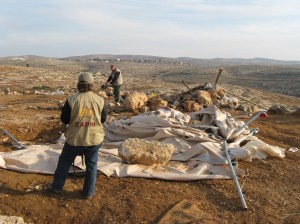
Demolition in Palestine
Another home demolition in Palestine, photo by Chris Cowan

A new report by the European Union leaked to journalists says that the possibility of a two-state solution is getting more and more remote as Israeli policies of population transfer and demolition of homes continue. An article by the Israeli newspaper Ha’aretz says that ”the report stated that Israeli policy in Area C ‘results in forced transfer of the native population,’” which is illegal under the Geneva Conventions and other international laws.

Area C is part of a division of the West Bank stipulated by the Oslo Accords: Area A, where the Palestinian Authority has full civilian and security control, although Israeli incursions and closures are still controlled by Israel; Area B, which is those parts of the West Bank that come under Israeli security control and Palestinian civilian control; and Area C, which is territories under full Israeli civilian and security control. All of areas A, B and C are considered Palestinian territory under international law.

In another article on the report in the UK Independent, it claims “the 16-page document is the EU’s starkest critique yet of how a combination of house and farm building demolitions; a prohibitive planning regime; relentless settlement expansion; the military’s separation barrier; obstacles to free movement; and denial of access to vital natural resources, including land and water, is eroding Palestinian tenure of the large tract of the West Bank on which hopes of a contiguous Palestinian state depend.”

The article describes what’s in the report:

“It says the EU needs “at a political” level to persuade Israel to redesignate Area C, but in the meantime it should “support Palestinian presence in, and development of the area”. The report says the destruction of homes, public buildings and workplaces result in “forced transfer of the native population” and that construction is effectively prohibited in 70 per cent of the land – and then in zones largely allocated to settlements of the Israeli military.

In practice, it says Palestinian construction is permitted in just 1 per cent of Area C, “most of which is already built up”. The EU report’s short- and medium-term recommendations include calling on Israel to halt demolitions of houses and structures built without permits – of which there have been 4,800 (in Area C alone) since 2000. But there is also a call for the EU to support a building programme that includes schools, clinics, water and other infrastructure projects.

The EU should also be more vocal in raising objections to “involuntary population movements, displacements, evictions and internal migration”.

For more information about Area C, click here.For more information about Palestinian home demolitions, see the website of the Israeli Committee against Home Demolitions.
For the United Nations agency UNWRA’s call to stop home demolitions, click here.

For stories on the ground, see the blogs of recent and current US Ecumenical Accompaniers Chris Cowan and Tammie Danielsen. Chris served in Hebron and the Southern Hebron Hills area last year and Tammie is serving there now through the US Program of the Ecumenical Accompaniment Programme for Palestine and Israel, a peace program begun by the World Council of Churches.

--- --- ---


To receive regular bulletins from Ann Hafften, sign up at my blog - A Texas Lutheran's Voice for Peace: http://www.voicesforpeace.blogspot.com/