Tuesday, May 21, 2013

Join the International Prayer Vigil

Prayer Vigil
ELCA Peace Not Walls urges us to join the International Prayer Vigil. Please join the prayer vigil for the Christian communities in Palestine and Israel, for all those who are suffering in the Holy Land, for Palestinians and Israelis, and for peace in the Middle East and the world. Pray together as a family, as office/parish colleagues, or as a congregation, on the 24th of each month.

The ACT Palestine Forum has invited the world to pray for peace in the Holy Land on the 24th of every month until the occupation of Palestine ends, all violence ceases and there is a just negotiated peace. Gather a few people together at lunch time or join with area churches to host a prayer vigil together with an educational time after prayer.
Find much more info at this link.

Rick Steves
Intrepid travel writer Rick Steves is making his way through Palestine and Israel and blogging as he goes. Find his blog here. While Rick's first impressions often bear the signs of the pro-Israel influence that is so much a part of American culture, he has contacts and guides who are showing him for the first time the complexity of the Occupation. Rick is a wonderful teacher, and I look forward to his work when he's had time to digest and think about everything he is seeing in these days.

If you are not acquainted with Rick's Travel as a Political Act, I urge you to check it out. I am hopeful that Rick's time in Palestine and Israel will eventually lead to his interpretation of the reality there through the lens of travel as a political act.

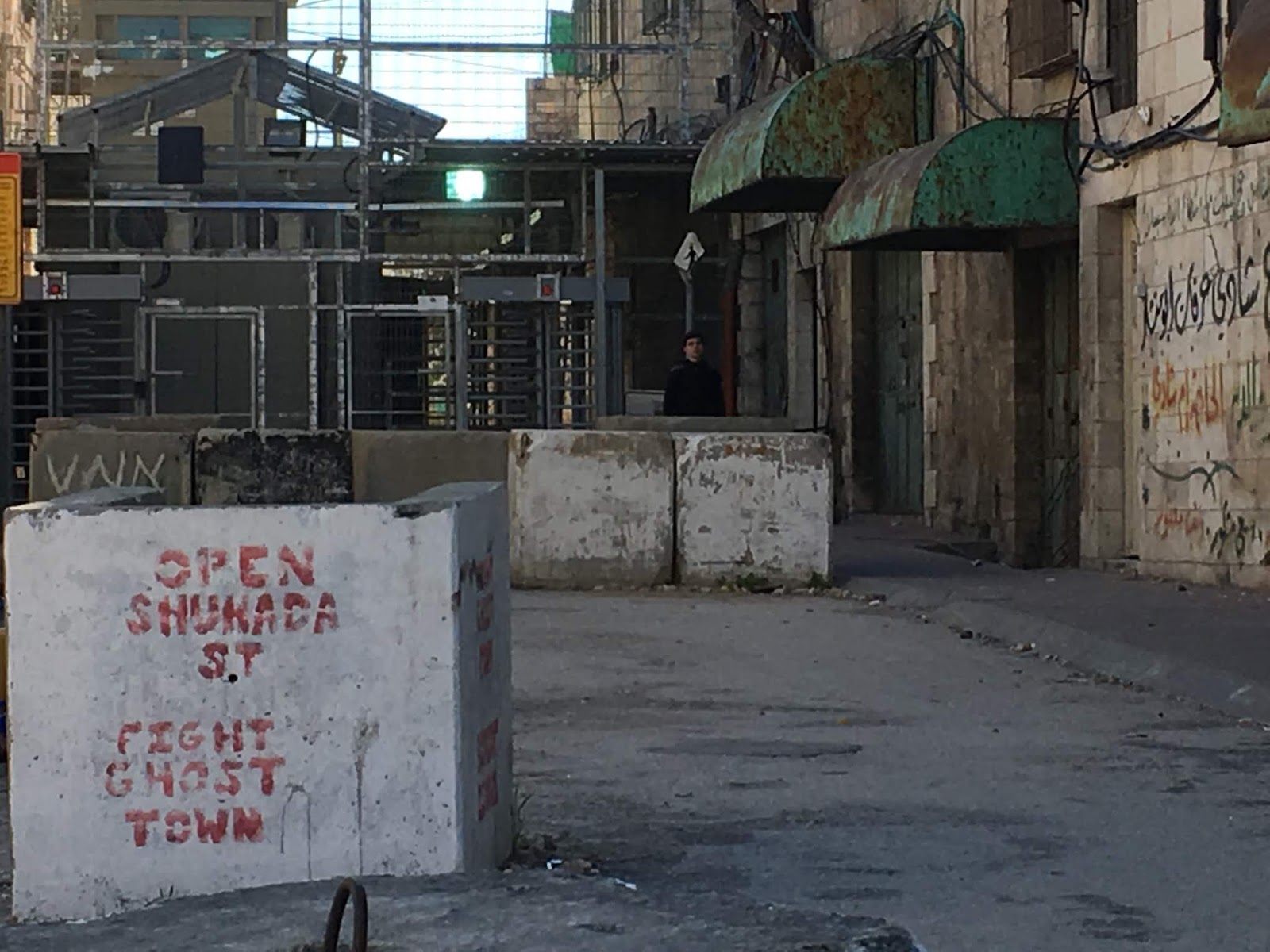
In South Hebron, 'new rules' are rather like the 'old rules'
Security forces are targeting Israeli activists and Palestinian shepherds in new ways in the South Hebron hills. It’s as if they’d decided to circumvent the whole irksome apparatus of the courts and to resort instead to brute force. It’s much simpler, and maybe more effective, according to David Shulman professor at the Hebrew University of Jerusalem and a long-time activist in Ta’ayush, Arab-Jewish Partnership.
Read the article at 972magazine here.

Today we have the New Rules. In some respects they’re rather like the Old Rules. The aim and sole rationale remain the same: dispossession, expulsion, taking more land. The army has, it seems, given up on its favorite device of declaring Closed Military Zones, week after week; perhaps the outright illegality of this practice ended up causing them too many problems in court. Instead, the soldiers simply chase us — Palestinian shepherds, farmers, Israeli activists—physically away, pushing, shoving, threatening, beating. They also have decided they won’t allow us to document their crimes on film; as soon as we start filming, they rush at us and block our cameras with their cell phones. It’s as if they’d decided to circumvent the whole irksome apparatus of the courts and to resort instead to brute force. It’s much simpler, and maybe more effective.

At the same time, there’s been a wave of further annexations. The settlers are paving new roads, which become de facto boundaries, far beyond the settlements’ periphery. Plots of land that the Palestinian owners have worked for some years, or have reclaimed, often with our help, have been declared “in dispute” — which means that settlers have access to them, but the rightful owners don’t. All over South Hebron there are attempts from above and from below to roll back the gains we’ve made in recent years. Probably officers in the Civil Administration have been devising creative schemes. And there have been the usual, routine detentions, harassments, lethal threats, arrests — more, in fact much more, than before. Add to this a wave of pure nit-picking and pestering, for example by handing out tickets to activists, Israeli and Palestinian, for absurd traffic violations; several of our people have recently been fined large amounts for crossing the road while not on a marked pedestrian crossing. Remember we’re talking about the vast open spaces of a desert; the nearest pedestrian crossing is either in Jerusalem or Beersheva, 40 miles away. I myself witnessed the police administering just such a fine the last time I was in the area, some three weeks back.
Read the full article here.

--  -- 

To receive regular bulletins from Ann Hafften, sign up at my blog - A Texas Lutheran's Voice for Peace: Error! Hyperlink reference not valid.


Monday, April 22, 2013

Disturb us, O Lord

Kairos South Africa shared this prayer by Bishop Desmond Tutu, Disturb us, O Lord. I encourage you to explore the Kairos South Africa website.

Disturb us, O Lord

when we are too well-pleased with ourselves
 when our dreams have come true because we dreamed too little,
 because we sailed too close to the shore.

Disturb us, O Lord

when with the abundance of things we possess,
 we have lost our thirst for the water of life
 when, having fallen in love with time,
 we have ceased to dream of eternity
 and in our efforts to build a new earth,
 we have allowed our vision of Heaven to grow dim.

Stir us, O Lord

to dare more boldly, to venture into wider seas
 where storms show Thy mastery,
 where losing sight of land, we shall find the stars.

In the name of Him who pushed back the horizons of our hopes
 and invited the brave to follow.

Amen

[Attributed to Archbishop Emeritus Desmond Tutu adapted from an original prayer by Sir Francis Drake]


-- --

Settlers raise Israeli flag over West Bank church

RAMALLAH (Ma'an) -- Israeli settlers on Friday took over a monastery in a village near Ramallah and raised an Israeli flag over the building.

Priest Aziz Raei told Ma'an that Israeli settlers used force to occupy the monastery and its adjacent chapel in al-Taybeh, a Christian village in the central West Bank.

This news was issued on Friday, April 19. I wish we had more information. 

-- --

Organic Farming in the Shadow of the Wall

Ecumenical Accompanier Dee Poujade is wrapping up her time in Tulkarem, in the West Bank. In this blog post she tells us about the organic farmers she met there.

"Fayez and Mouna Taneeb are farmers who are making a difference.  When we caught up with them at their organic farm on the outskirts of Tulkarm, Fayez was preparing for a month-long trip to Europe.  There he will give workshops on “One Million Trees,” a project that will educate the Europeans on the difficulties faced by Palestinian farmers, while raising money to plant trees to replace ones that have been uprooted by wall construction and burned by settler violence.

"A long-time peace activist, Fayez is a leader in Palestinian Popular Struggle, an organization that works to find creative, non-violent ways to demonstrate the difficulties faced by Palestinians."  Click the link to Organic Farming in the Shadow of the Wall

Dee's blog is
A Walk Through the Valley

-- --

School Threat Assessment in Urif

Another accompanier (from Canada) wrote in her blog, "
A Mosaic for Peace" about a situation in the town of Urif.

 She writes:  "The concept of school security took on a whole new twist last week when we visited a boys secondary school in the picturesque north central West Bank community of Urif.

"Urif is located half way up a very large hill.  It is accessed along narrow winding roads that climb upwards until well past the community.  Olive groves and pink blossomed almond trees surround the village.  Green fields dot the landscape. Looking out across the valley, one can see the Mediterranean Sea on a clear day.   The school is located on the upper outside edge of the village.  Visible on the hilltop adjacent to the school is the nearby Israeli settlement of Yizhar Huwwara.


"(...) Settlers from the nearby settlement of Yizhar Huwwara have been increasingly attacking both the village and the school, as well as the students.  Mr al-Najar explained that the settlers are taking more and more land from the villagers, and are preventing farmers from going to their fields for sprig planting.  Olive and almond tress have been destroyed.  The community mosque was set ablaze 2 1/2 months ago.  The school and students have suffered numerous attacks, which occur most frequently as students are being dismissed from school.   Settlers, including men, women and children from the neighbouring settlement, have been attacking the building and the students, swearing at staff and students, and throwing stones that break windows and damage school equipment."  Click this link for the full story

--

The Gatekeepers

If you haven't seen The Gatekeepers, the film nominated for an Oscar featuring all the past heads of Shin Bet, the Israeli secret police, make every effort to see it.

The BBC has a fine article,
The Gatekeepers: Israeli Shin Bet chiefs on film, that includes clips from the movie. 

Here's a little excerpt:
The film centres around six very personal outspoken accounts from men who oversaw Israeli operations, from targeted assassinations of Palestinian leaders, to surveillance and torture.
Their emotions range from professional pride to expressions of unease over the exercise of their formidable power.

"These men had to make highly difficult security decisions, on the spot, leaving politics aside," commented Paul Charney, chairman of the Zionist Federation of the UK, who joined our discussion.

"Now they can discuss, for the first time, their own moral fibre, their own politics, for the rest of the world."

"What comes through powerfully in the film is their sense that the best they can do is create some political space for others, the political elite, to step in to do what must be done," remarked Daniel Levy of the European Council of Foreign Policy, who's had extensive experience in Israeli-Palestinian peace-making.
 
---- ---- ---- ----


To receive regular bulletins from Ann Hafften, sign up at my blog - A Texas Lutheran's Voice for Peace: http://www.voicesforpeace.blogspot.com/


Friday, March 29, 2013

Easter brings rejoicing amid struggle

Bishop Munib Younan's Easter message is in circulation. He serves the Evangelical Lutheran Church in Jordan and the Holy Land. An excerpt is below; click here to read the full text of the message.

Bishop Younan writes, "Do we give in to despair? Do we give up? Do we emigrate to lands abroad? The narrative of Easter, the power of the cross and resurrection is the only source of our hope. On the Via Dolorosa, Jesus encountered all the dark forces that we experience in the Middle East today. He sacrificed himself so that we might hope and we can trust his power. We will not allow extremism, oppression, violence, bloodshed, hatred, walls or confiscated lands to diminish our hope, to make us give in to despair. The hope of living with dignity, justice, and reconciliation will triumph over the dark forces we face. This is the power of the cross today. This is the hope of Christians in Jerusalem and the whole Holy Land. This is the task of the Church universal, to work with love and tenderness to protect life and the human rights of every nation. As long as the church of Christ in every land, especially in the Holy Land, claims this responsibility within the spirit of Easter, I will be filled with hope. And hope does not disappoint us, because God’s love has been poured into our hearts through the Holy Spirit that has been given to us.

Click here to learn more about the ELCJHL.

-- --

Churches for Middle East Peace has provided a series of Lenten devotions. Now with Easter at hand, they sent a summary of Holy Week in Jerusalem.

"Thousands of Christians from around the world are gathering in Jerusalem to celebrate Holy Week, joining many Palestinian Christians, the “living stones” of the Holy Land. On Palm Sunday they climbed the Mount of Olives to re-enact Jesus' triumphant entry into Jerusalem, a powerful scene punctuated with activism as many Palestinian worshipers took the opportunity to raise awareness of the approximately 50,000 Christian Palestinians living in East Jerusalem, the West Bank and Gaza."

CMEP's Good Friday bulletin features a photo from the Evangelical Lutheran Church in Jordan and the Holy Land.

-- --

Pastor Mitri Raheb's Holy Week greeting is in the Bright Stars of Bethlehem news.

"I bring you greetings during this sacred Holy Week. We are all reminded of the gift of forgiveness and newness in Christ as we together journey to the cross.

"While there are dark days ahead, I look forward with anticipation to the hope of Easter morning. For many of my fellow Palestinians, we live in this Easter hope daily. We are able to do that, in part, because of shared ministry through Bright Stars of Bethlehem."

-- --

Looking back at President Obama's visit, I was impressed with Sandy Tolan's analysis in Obama is missing the real Israel. Readers may know Sandy Tolan from his book, The Lemon Tree.

Here's an excerpt: "Occupation and freedom: These concepts are just as legitimate for consideration and action as is any Israeli’s right to feel secure. For a just and comprehensive peace, these ideas need to share equal status. Yet the notion of occupation is increasingly ignored by the American press as some quaint remnant of a revolutionary past. More important, the corrosive nature of the occupation, and the struggle of a people to free itself from it, has been essentially dropped as policy issues by successive American administrations eager to speak, as President Obama did Wednesday, of the “eternal” American bond with Israel. The irony is that by refusing to publicly confront the occupation, and meaningfully back the Palestinian quest for freedom – instead of blocking it at the United Nations – the Obama administration is undermining the Israeli security goal at the center of its policy. Permanent occupation in reservation-style enclaves is not a long term answer for Israel and Palestine, and in the end it will not make Israelis feel secure."

--- --- ---

To receive regular bulletins from Ann Hafften, sign up at my blog - A Texas Lutheran's Voice for Peace: http://www.voicesforpeace.blogspot.com/


Thursday, March 21, 2013

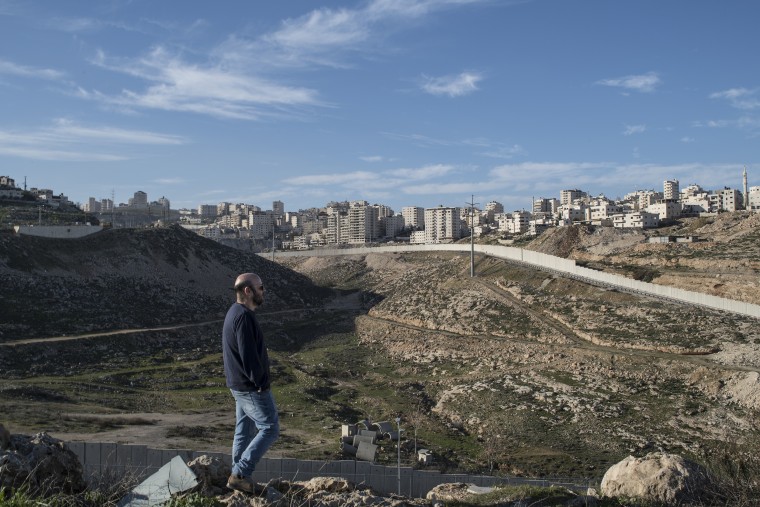
News and notes around President Obama's visit

There will be lots of news out of President Obama's trip to Israel and Palestine. Here are a few articles published just before and during the visit.

This link takes you to President Obama's speech in Ramallah, from Maan News.

-- --

Here is a link to the text of the president's speech in Jerusalem from the Wall Street Journal.

-- --

From the Washington Post, In West Bank, faint hopes for Obama's visit.
"Previous American presidents have come and gone, people say, and nothing has changed. Israel’s occupation of the West Bank has deepened, its settlements have expanded, and there is no sign on the horizon of a political solution that will bring Palestinians independence."

 -- --

In The Daily Beast, Mr. President, Don't Forget the Nakba
"At Yad Vashem, President Obama will be told to “never forget” while conveniently ignoring the ghost of the Nakba just outside. A peaceful solution can never be achieved while ignoring the rights of Palestinians prevented from living in their homeland by the state of Israel. If President Obama wants to be honest with Israelis, he should tell them that explicitly and take a moment to recognize the victims of Deir Yassin while he is there."

-- --

In the New York Times Magazine, a fine, lengthy piece, Is This Where the Next Intifada will Start?
“`This is the worst time for us,' Bassem confided to me last summer. He meant not just that the villagers have less to show for their sacrifices each week, but that things felt grim outside the village too. Everyone I spoke with who was old enough to remember agreed that conditions for Palestinians are far worse now than they were before the first intifada. The checkpoints, the raids, the permit system, add up to more daily humiliation than Palestinians have ever faced. The number of Israeli settlers living in the West Bank has more than tripled since the Oslo Accords. Assaults on Palestinians by settlers are so common that they rarely made the news. The resistance, though, remained limited to a few scattered villages like Nabi Saleh and a small urban youth movement."

-- --

Mohammed El Kurd, 14, hero of the vibrant documentary, My Neighbourhood, addressed Obama in the article, ‘Mr President, I’m sure you know everything’ — a Palestinian boy expelled from half his home urges US action, published by Mondoweiss.  Click this link for the article.

-- --

For general information, the Center for American Progress has issued recent findings from discussions in the Middle East.  Read the full report here.
"President Obama will arrive in the region at a time when many voices are questioning the ability and willingness of the United States to lead. Budget battles in Washington combined with the rebalance to Asia and the complexity of the challenges in the Middle East cause many in the region to doubt the United States. President Obama’s visit offers an important opportunity for the United States to assume a leadership role in dealing with security threats such as Iran and Syria, political challenges such as the historic changes sweeping many countries in the Middle East, and diplomatic challenges like the unresolved Israeli-Palestinian conflict.

"The window for a two-state solution to the Israeli-Palestinian conflict is closing. Many Israelis and Palestinians told us that if no progress toward a two-state solution is made during President Obama’s second term in office, it may never happen. The Palestinian Authority is facing a severe political and financial crisis, and its collapse would create even more problems in a region of turmoil."
 

-- -- --


To receive regular bulletins from Ann Hafften, sign up at my blog - A Texas Lutheran's Voice for Peace: http://www.voicesforpeace.blogspot.com/


Friday, March 15, 2013

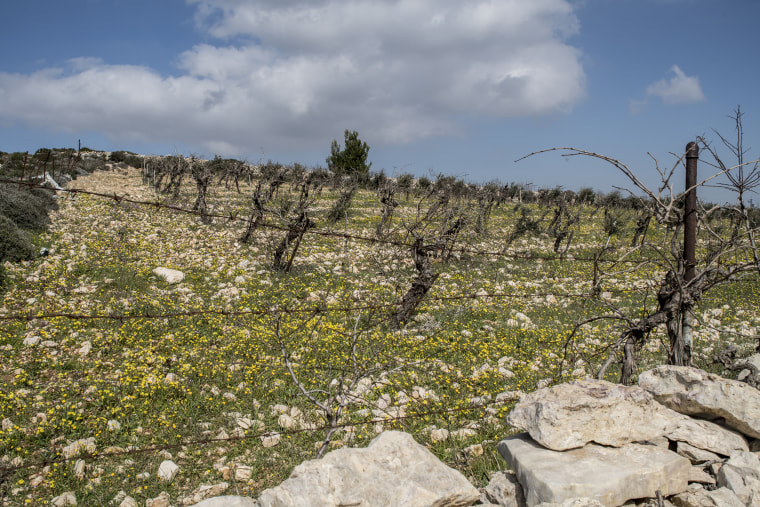
President Obama to Palestine and Israel

Friends,
I'm sorry I've been away... tending to matters here and there, my responsibilities on the Board of Friends of Sabeel-North America and preparation for an exciting conference in Dallas on racial disparity in the criminal justice system.  Back to work!

ELCA Peace Not Walls encourages us to lean on the president's itinerary and provides good action steps. Ask President Obama to meet with religious leaders when he visits the Middle East next month; call for a halt to settlement activity; ask his delegation to visit Augusta Victoria Hospital. See the full action alert which provides links for writing to President Obama, Secretary Kerry and your Members of Congress.

Some highlights from the bulletin:
The president has often sought out the views of U.S. religious leaders through his White House Office of Faith-Based and Neighborhood Partnerships and other meetings. It will be important for the President to hear the voices of faith leaders during his visit to the region as well. The Council of Religious Institutions of the Holy Land consists of leaders of the three Abrahamic faiths, including Bishop Munib Younan of the Evangelical Lutheran Church in Jordan and the Holy Land.

Please contact the White House and ask President Obama to meet with the Council of Religious Institutions of the Holy Land during his visit.

As noted in a report issued late last year by the United Nations (U.N.) on the humanitarian impact of the Israeli settlement policy on Palestinians, since 1967, Israel has established about 150 settlements (residential and others) in the West Bank, including East Jerusalem; in addition to some 100 “outposts” erected by settlers without official authorization. Three new settlements were approved in 2012 by retroactively ‘authorizing’ such outposts. More than 500,000 people live in these settlements, which are against international law. Additionally, in 2012, one Palestinian was killed and approximately 1,300 injured by Israeli settlers or security forces in incidents directly or indirectly related to settlements, including demonstrations.
Please contact the White House and ask President Obama to urge him to demand, during his visit, a halt to all settlement activity.


The Lutheran World Federation has operated the Augusta Victoria Hospital for the benefit of Palestinian refugees since 1950. The ELCA and other churches around the world have been strong supporters of this effort to meet human need and be a sign of hope over the years. 
Please contact the White House and ask President Obama to have one or more members of his delegation visit the Augusta Victoria Hospital.


Click these to contact President Obama, Secretary Kerry and your Members of Congress.
-- -- --

This comes from Churches for Middle East Peace (CMEP).
Encourage President Obama's Nativity Church Visit
As the president works toward fostering a real and hopeful peace agreement between the Israeli and Palestinian governments, we need to encourage his visit to the Church of the Nativity. Your message will provide President Obama more moral and political support to do the hard work of facilitating an actual peace.
CMEP has been encouraging the president to visit the church since his trip to the region was announced.Click here to send an email of encouragement and hope to the president today.

--- --- --
Jim Wall writes about the president's itinerary in his Wall Writings blog:
"Unlike 2008, on next week’s trip Obama will not travel to Ramallah. Would the West Bank be too “dangerous”, as Israeli tour guides like to tell tourists or pilgrims? Or could it be that by avoiding Ramallah, Obama would not have to visit the Ramallah burial site of the late Palestinian leader, Yasir Arafat.

"Not to visit Arafat’s Ramallah burial site would be especially egregious since next week’s itinerary already includes Obama visits to several symbolic Israeli sites:

 `In addition to Yad Vashem, the Holocaust memorial that is an obligatory stop for every visiting head of state, the president will lay a wreath at the grave of Theodor Herzl, the writer who is considered the father of modern Zionism.'

"Instead of traveling to Ramallah, President Obama will go to Bethlehem, where he will be received by Palestinian President Mahmoud Abbas.

"By going to Bethlehem, Obama will see, up close and personal, the wall that surrounds the birthplace of the Christ child.

"With all the excitement over the elevation of Pope Francis, the first Jesuit pope, this is a good time to recall that when the now-retired Benedict XVI made a 2009 papal visit to Bethlehem, he was photographed standing in front of a wall with graffiti behind him, illustrating how locals feel about the the occupation wall."


-- --


To receive regular bulletins from Ann Hafften, sign up at my blog - A Texas Lutheran's Voice for Peace: http://www.voicesforpeace.blogspot.com/

Friday, January 18, 2013

Sodastream boycott, Bab al-Shams, Petition against US Aid to Israel, and more


+ Sodastream will be advertising during the Superbowl. Let's begin to spread the word: Boycott Sodastream! Sodastream is manufactured in one of the settlements in the occupied West Bank.
Sodastream presents... How to profit from Occupation, Oppression and Apartheid. While this video is titled, "Sodastream presents..." it is not from Sodastream but comes from the organized boycott effort.


+ Bradley Burston writes in Ha'aretz, "The founding of Bab al-Shams was genius." His article is, An Israeli in awe of a Palestinian act of non-violence.

"On Friday, nearly a hundred men women and children pitched tents on a Palestinian-owned plot of land in the patch of the West Bank called E-1, a political and diplomatic minefield which Netanyahu has vowed to build on, and Washington has warned him not to. The place was given a new name - Bab al-Shams, the Gate of the Sun.
"The Palestinians who staked down the tents were explicit in calling their rocky hilltop encampment a village. But the manner of its founding made it all too clear to Israelis what it was as well - a ma'ahaz, a settlement outpost, no less and no more illegal than the scores and scores of rogue farms, tent camps, rude shacks and proto-suburbs which Israeli settlers have staked across the West Bank and East Jerusalem." [Read the whole blog/article at this link.]


+ Jewish Voice for Peace is backing up the stance of 15 US church leaders. Please sign and share this petition. "Israel, the biggest long-term recipient of US aid, should not be above the law. Mr. President, please condition US aid to Israel on compliance with US and international law. It must not be used to violate the rights of Palestinians." The goal is 60,000 signatures.


+ Budrus is a village that has carried out a successful non-violent resistance to the Separation Barrier. The movie, "Budrus," introduced me to the citizens of the village. Here's sad news from "Just Vision," the folks who made the movie.

"We have some heartbreaking news to share.
 "Earlier this morning, 16-year-old Sameer Awwad, a resident of Budrus, was killed by the Israeli military near the Separation Barrier in the village. He was shot with live ammunition several times in the leg, neck and chest.
"Over the past few years, as we've grown close to many of the residents of Budrus and shared their stories with you, we have been struck by how close-knit their community is. That solidarity was a huge part of the success of their nonviolent struggle several years ago, and today, we know it means that the entire village is staggered by this terrible news."
 Our condolences go out to Sameer's family and to the people of Budrus. We hope that the strength and resilience that have guided them through difficult times in the past will help them overcome this tragedy.


5 Broken Cameras is nominated for an Academy Award in the documentary catagory. I'll be watching and hoping for a win on Oscars night. More importantly, I'm encouraging everyone to try to see this film and share info about it.


--- --- ---


To receive regular bulletins from Ann Hafften, sign up at my blog - A Texas Lutheran's Voice for Peace: http://www.voicesforpeace.blogspot.com/


Monday, December 24, 2012

Mitri Raheb: Bethlehem Then and Now

Pastor Mitri Raheb's Dec. 9 sermon, "Bethlehem Then and Now" is circulating. It is well worth reading and sharing (below).  In addition, Pastor Raheb offers an Advent greeting on video.  Pastor Mitri Raheb's Advent greeting on video here.

Bethlehem Then and Now
Rev. Dr. Mitri Raheb's Sermon
December 9, 2012


“O little town of Bethlehem” is one of the most famous Christmas Hymns. Bethlehem has become almost a mythological place: Children imagine it with a few “huts,” a few camels and the holy family. At the time of Jesus, Bethlehem was a little town of 300-1,000 inhabitants. What people might not know is that the city of Bethlehem today is not in Israel but in Palestine, and that it is a bustling city with 28,000 people. One third of them are Palestinian Christians. 

When Christians today sing “O little town of Bethlehem” they seldom think of the real city with the real people. When it comes to Bethlehem and to Christmas, Christianity has become so spiritualized and so commercialized. 

It’s all about Santa, the Tree, the gifts, and the food. But what happened in Bethlehem 2000 years ago was something real. Jesus was born as a refugee. His family was forced to leave Nazareth and go to Bethlehem. Later his family had to flee the brutality of King Herod and go into hiding in Egypt for two years. Today Bethlehem has almost 20,000 Palestinian refugees who lost in 1948, when the State of Israel was established, their land, homes and belongings and came to Bethlehem seeking refugee. They are still living in three refugee camps waiting for a just solution. 

The Christmas story of the Bible has nothing to do with what we know today as Christmas. Take the story of the Magi or the kings from the East. That story is read in a nostalgic way and is being performed over and over again. But a closer look at the story will show that it talks about the Roman Empire and their occupation of Palestine. Empires do not control only the native people they rule; they also work to ensure that visitors coming in contact with the land and its native people are controlled. In 2010 a well-known evangelical preacher came to attend a theological conference in Bethlehem. Upon arrival at Ben Gurion Airport in Tel Aviv, Israeli officials told him that they would like to invite him for a cup of coffee in their offices and have a chat. For almost four hours he was questioned about his decision to attend a conference in Bethlehem, what he thought of the Palestinian Kairos Document, and how he knew some of these “radical” Palestinian theologians. This was supposed to be VIP treatment. Others who are part of solidarity movements with Palestine are often detained at the Israeli airport and sent back to their home countries. 

When this highly reputed American evangelical preacher told us his story I told him, “Welcome to Palestine. As someone who knows his Bible well you should not have been surprised by such treatment. The same VIP treatment was also extended to the Magi from the east that came to see Jesus in Bethlehem. Herod too invited them ‘for a cup of coffee’ to ascertain why they wanted to travel to Bethlehem, and how they knew about the newborn child. So now you have experienced something biblical. Welcome to the Holy Land!” 

I still recall how everyone in the group laughed. Then an American woman attending the conference asked me, “So what should we tell the Israelis at the airport when they question us about where we have been? What should we say?” I replied “I wish I could tell you what the angel told the Magi, after visiting Jesus; basically showing them another route not controlled by the Empire. Unfortunately, all roads, airports and borders are controlled by Israel. By the way, an invitation to drink a cup of coffee by Israeli or Arab intelligence authorities is known in political jargon as interrogation.”

We seldom read the story of the Magi as them being interrogated by the occupation that holds the power. But this is what it was. 

Bethlehem at the birth of Jesus was a besieged city. Today Bethlehem is again a besieged city surrounded from three sides by a 25 foot high concrete wall. So what if Jesus were to be born today in Bethlehem? If Jesus were to be born this year, he would not be born in Bethlehem. Mary and Joseph would not be allowed to enter from the Israeli checkpoint, and so too the Magi. The shepherds would be stuck inside the walls, unable to leave their little town. Jesus might have been born at the checkpoint like so many Palestinian children while having the Magi and shepherds on both sides of the wall. 

So where is the Gospel in all of this? The good news is this: God came into no other than this troubled, wounded and real world. He is real and wants to enter into our real world with all its complexities and fears. Christmas is real. It is not a myth or a wonder world. The Gospel is that God became one of us, one like us. He came as a child, vulnerable, and weak. And yet through his vulnerability was able to overcome the empire. Christmas is God’s promise to us that we will have life, peace, and future. For us Palestinian Christians and citizens of Bethlehem the Christmas story of then is our story today. Praise God that Jesus is the same: yesterday, today and forever.

Pastor Raheb's sermon at the Bright Stars of Bethlehem website here.

---- ---- ---- ----


To receive regular bulletins from Ann Hafften, sign up at my blog - A Texas Lutheran's Voice for Peace: http://www.voicesforpeace.blogspot.com/